
 Apoyo inmunológico
La sorprendente conexión entre tu intestino y tu sistema inmunitario
La mayoría de las personas recurren a la vitamina C cuando se sienten indispuestas. Pero, ¿y si la verdadera clave para la resiliencia inmunológica ha estado en tu intestino todo el tiempo?
 Tu Intestino
 Tu Inmunidad
Tu microbioma intestinal se comunica directamente con las células inmunitarias, entrenándolas para distinguir amigos de enemigos
Cuando llega la temporada de resfriados y gripe, tendemos a centrarnos en lo que ocurre en nuestro tracto respiratorio: mocos, tos y congestión. Pero la base de la resiliencia respiratoria en realidad comienza mucho más abajo, en tu sistema digestivo.
Esta conexión intestino-inmunidad no es solo una biología interesante. Es un cambio radical en cómo abordamos el mantenernos sanos durante todo el año. Y explica por qué ciertas cepas probióticas pueden tener un efecto tan profundo en la salud respiratoria.
Dónde reside realmente tu sistema inmunitario
Cómo las bacterias intestinales apoyan tu salud respiratoria
La relación entre tu intestino y tus pulmones se llama eje intestino-pulmón, una autopista de comunicación bidireccional donde las señales viajan constantemente entre estos órganos distantes. Cuando tu microbioma intestinal está equilibrado, produce compuestos que viajan a través de tu torrente sanguíneo e influyen en la actividad inmunitaria en todo tu cuerpo, incluido tu tracto respiratorio.


Las bacterias beneficiosas en tu intestino hacen varias cosas para apoyar la función inmunitaria: desplazan a los patógenos dañinos, producen compuestos antimicrobianos, fortalecen la barrera intestinal para evitar que sustancias no deseadas entren en tu torrente sanguíneo y se comunican directamente con las células inmunitarias para mantenerlas alerta pero equilibradas.

Dato clave: Los estudios demuestran que las personas con microbiomas intestinales diversos y equilibrados experimentan menos infecciones respiratorias y se recuperan más rápido cuando se enferman.
Evaluación de Preparación Inmunológica
Responde 5 preguntas rápidas para evaluar tu base inmunológica actual
Tu estilo de vida apoya una función inmunológica saludable. Un probiótico específico puede ayudar a mantener esta resiliencia y proporcionar un apoyo adicional durante las estaciones desafiantes.
Algunos factores pueden estar comprometiendo tu preparación inmunológica. Apoyar tu conexión intestino-inmunidad con cepas probióticas específicas podría ayudar a fortalecer tus defensas.
Múltiples factores están afectando tu base inmunológica. Abordar la salud intestinal con cepas probióticas clínicamente estudiadas puede proporcionar un apoyo significativo para tus defensas.
La ciencia de los probióticos dirigidos a la inmunidad
No todos los probióticos apoyan la inmunidad por igual. Ciertas cepas han sido específicamente estudiadas por su capacidad para mejorar la función inmunitaria y apoyar la salud respiratoria. La clave es hacer coincidir las cepas correctas con el propósito correcto.
Por qué las fórmulas dominantes de Lactobacillus son importantes para la inmunidad
¿Por qué esta proporción? Las cepas de Lactobacillus son particularmente efectivas para estimular las respuestas inmunitarias y se ha demostrado en estudios clínicos que apoyan la salud respiratoria. Esta mayor proporción de Lacto proporciona un apoyo inmunitario dirigido mientras se mantiene el equilibrio general del microbioma.
Cepas Clínicamente Estudiadas para el Apoyo Inmunológico

Bl-04
Bifidobacterium animalis subsp. lactisEstudiado para reducir el riesgo de infecciones del tracto respiratorio superior. Se ha demostrado que modula las respuestas inmunitarias en las fosas nasales y el sistema respiratorio.

DR7
Lactobacillus plantarumInvestigado por apoyar tanto la respuesta al estrés como la función inmunitaria. El estrés puede debilitar la inmunidad, lo que hace que esta cepa de doble acción sea particularmente valiosa.

CRL-1505
Lactobacillus rhamnosusEspecíficamente estudiado por fortalecer la conexión entre la inmunidad intestinal y la defensa respiratoria. Mejora las respuestas protectoras naturales del cuerpo.
Más allá de los probióticos: el enfoque 4-Biotic
Si bien los probióticos de una sola cepa pueden ser útiles, el apoyo inmunológico integral se beneficia de un enfoque más completo. La fórmula Vital Planet Respiratory & Immune combina cuatro tipos de compuestos que apoyan el microbioma.
La diferencia 4-Biotic
Un enfoque ecosistémico completo para la salud intestinal que apoya la inmunidad

Prebióticos
Fibras especializadas que alimentan a las bacterias beneficiosas, ayudando a que las cepas que apoyan la inmunidad prosperen en tu intestino

Probióticos
65 mil millones de UFC de 65 cepas, incluidas especies clínicamente estudiadas que apoyan la inmunidad

Postbióticos
Compuestos beneficiosos producidos por el metabolismo probiótico que apoyan directamente la función de las células inmunitarias

Parabióticos
Bacterias beneficiosas tratadas térmicamente que entrenan las células inmunitarias sin colonizar el intestino
Cuándo considerar los probióticos dirigidos a la inmunidad
Aunque los probióticos pueden ser beneficiosos durante todo el año, ciertas situaciones pueden requerir un apoyo inmunológico adicional:
Transiciones estacionales: A medida que el clima cambia, nuestros cuerpos enfrentan nuevos desafíos. El otoño y el invierno traen una mayor exposición a los virus respiratorios.
Períodos de alto estrés: Las hormonas del estrés pueden suprimir la función inmunológica. Durante momentos exigentes en el trabajo o cambios en la vida, el apoyo intestino-inmunidad se vuelve especialmente valioso.
Viajes: La exposición a nuevos entornos, la alteración del sueño y el estrés pueden afectar tus defensas. Apoyar tu intestino antes y durante los viajes puede ayudar.
Después del uso de antibióticos: Los antibióticos pueden alterar el equilibrio de las bacterias intestinales, lo que podría afectar la preparación inmunológica. Reponer las cepas beneficiosas ayuda a restaurar esta base.
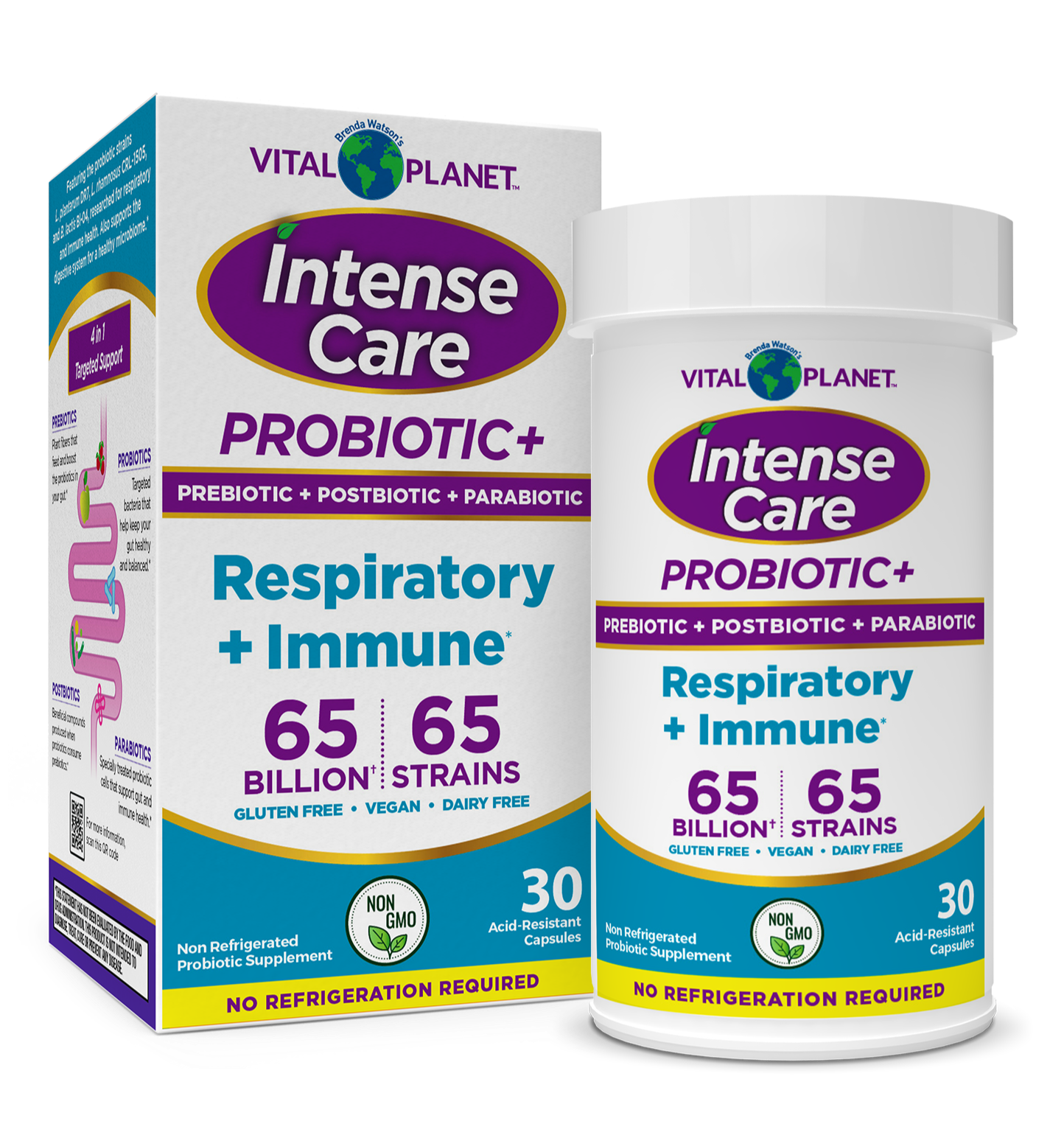
Vital Planet Respiratory & Immune
Cepas clínicamente estudiadas para el apoyo intestino-inmunidad
 65 mil millones de UFC
  65 cepas diversas
  Bl-04, DR7, CRL-1505
  Fibra prebiótica orgánica
Preguntas frecuentes sobre la salud intestinal y la inmunidad
Desarrollando una Resiliencia Inmune a Largo Plazo
La verdadera fortaleza inmunológica no se construye de la noche a la mañana. Es el resultado de apoyar consistentemente los sistemas de defensa naturales de su cuerpo. Al nutrir la conexión intestino-inmune con cepas probióticas dirigidas, usted está invirtiendo en una base que le sirve no solo durante la temporada de resfriados, sino durante todo el año.
La investigación es clara: un microbioma intestinal equilibrado y diverso es una de las herramientas más poderosas para mantener una función inmunológica robusta. Combinado con un sueño adecuado, manejo del estrés y una dieta rica en nutrientes, el apoyo probiótico puede ayudar a su cuerpo a mantenerse resistente sin importar qué desafíos se le presenten.
Fuentes
- Mörbe, U.M. et al. (2021). "Tejidos linfoides asociados al intestino humano (GALT); diversidad, estructura y función." Mucosal Immunology, 14(4), 793-802. PubMed
- Enaud, R. et al. (2020). "El eje intestino-pulmón en la salud y las enfermedades respiratorias: un lugar para el diálogo entre órganos y reinos." Frontiers in Cellular and Infection Microbiology, 10, 9. Frontiers
- Dumas, A. et al. (2018). "El papel de la microbiota pulmonar y el eje intestino-pulmón en las enfermedades infecciosas respiratorias." Cellular Microbiology, 20(12), e12966. PubMed
- West, N.P. et al. (2014). "Suplementación probiótica para los síntomas de enfermedades respiratorias y gastrointestinales en individuos sanos y físicamente activos." Clinical Nutrition, 33(4), 581-587. PubMed
- Chong, H.X. et al. (2019). "Lactobacillus plantarum DR7 mejoró las infecciones del tracto respiratorio superior al mejorar los parámetros inmunes e inflamatorios." Journal of Dairy Science, 102(6), 4783-4797. PubMed
- Villena, J. et al. (2012). "La administración oral de Lactobacillus rhamnosus modula la respuesta inmune respiratoria desencadenada por el patrón molecular asociado a patógenos virales poli(I:C)." BMC Immunology, 13, 53. PubMed