
 BIENESTAR INTESTINAL RESPALDADO POR LA CIENCIA
Limpieza Parasitaria: Una Guía Científicamente Respaldada para el Bienestar Intestinal
Los parásitos intestinales afectan a más personas de lo que crees. Esta guía desglosa la exageración de las redes sociales con investigaciones citadas en PubMed sobre las hierbas que realmente tienen evidencia detrás de ellas.
¿Qué son los parásitos intestinales?
Los parásitos intestinales son organismos que residen en el tracto digestivo, viviendo de los nutrientes destinados a su huésped. Se dividen en dos categorías principales: protozoos (organismos unicelulares como Giardia y Blastocystis) y helmintos (gusanos multicelulares que incluyen oxiuros, lombrices intestinales y tenias).1
La suposición de que las infecciones parasitarias solo ocurren en regiones tropicales está desactualizada. Un análisis a gran escala de 5.792 muestras fecales recolectadas en todo Estados Unidos encontró que aproximadamente un tercio dio positivo para al menos un parásito intestinal, con Blastocystis hominis identificado en el 72% de los casos positivos.1 Solo los oxiuros afectan a un estimado de 40 millones de estadounidenses en un momento dado, lo que los convierte en la infección por helmintos más común en el país.
Los factores de riesgo incluyen viajes internacionales, agua contaminada, carne poco cocida, contacto con animales y función inmunológica debilitada. Pero incluso personas sin factores de riesgo obvios dan positivo, lo que es en parte la razón por la que la investigación sobre los parásitos intestinales y la conexión inmune intestinal se ha acelerado en los últimos años.2
Señales de que tu cuerpo podría estar albergando huéspedes no deseados
Los parásitos intestinales rara vez se anuncian con un solo síntoma obvio. En cambio, tienden a producir un conjunto de problemas que pueden imitar otros problemas digestivos. Si varias de las siguientes señales te resultan familiares, podría valer la pena explorar tu bienestar intestinal.*

Gases, hinchazón ocasionales recurrentes o hábitos intestinales irregulares que no se resuelven solo con cambios en la dieta.*

Los parásitos compiten por los nutrientes, lo que puede contribuir a la baja energía y la dificultad para recuperarse de las actividades diarias.*

Deficiencia inexplicable de hierro o B12 a pesar de una ingesta dietética adecuada. Los parásitos interceptan los nutrientes antes de que tu cuerpo pueda absorberlos.*

El eje intestino-piel significa que las alteraciones intestinales pueden manifestarse como erupciones ocasionales, urticaria o picazón.*

La inquietud nocturna o el rechinamiento de dientes (bruxismo) se han asociado con parásitos intestinales en algunas poblaciones. La conexión intestino-sueño es profunda.*

Los parásitos pueden modular la respuesta inmune, lo que podría hacer que el cuerpo sea más susceptible a otros desafíos.2*
 Cuándo consultar a un médico
Si sospechas una infección parasitaria, una prueba de heces de tu proveedor de atención médica es la forma más confiable de confirmarla. La información de este artículo es educativa y no sustituye el diagnóstico o tratamiento médico.
La Tradición Herbal: Ajenjo, Nogal Negro y Clavo
Mucho antes de la farmacología moderna, los curanderos tradicionales de diversas culturas se basaban en plantas específicas para apoyar el bienestar intestinal. Tres hierbas en particular se han utilizado durante siglos y ahora cuentan con un creciente cuerpo de investigación publicada que las respalda: ajenjo, cáscara de nogal negro y brote de clavo.
Lo que hace notable a este trío es que cada hierba parece funcionar a través de un mecanismo diferente, razón por la cual los herbolarios tradicionales las han combinado durante mucho tiempo en lugar de usar una sola.

La planta que nos dio la artemisinina, el compuesto ganador del Premio Nobel. La investigación muestra que el extracto de A. absinthium logró una eficacia comparable a la del praziquantel farmacéutico en la reducción del recuento de huevos de tenia y la carga de gusanos en estudios controlados.3 Sus polifenoles y flavonoides tienen actividad documentada reconocida desde el antiguo Egipto.4*

Contiene juglona, un compuesto de naftoquinona con investigación publicada. Un estudio encontró que la juglona redujo la carga parasitaria en un 63% en organismos masculinos y en un 52% en organismos femeninos, con una reducción del 66% en la carga de huevos en el tejido hepático.5 La cáscara también contiene taninos y compuestos de yodo que apoyan el bienestar intestinal.*

Rico en eugenol, su principal compuesto activo. La investigación publicada demuestra que el eugenol logró una eficacia del 100% contra las larvas de T. spiralis en las concentraciones probadas, con actividad observada en 24 horas.7 Los herbolarios tradicionales combinan específicamente el clavo con el ajenjo y el nogal negro por esta razón.*
Estas tres hierbas forman la columna vertebral de la mayoría de las fórmulas tradicionales de limpieza parasitaria. Pero la investigación publicada se extiende mucho más allá de este trío.
La investigación: Hierbas estudiadas para el bienestar intestinal
La siguiente tabla compila los hallazgos publicados sobre las hierbas clave que se encuentran en las fórmulas tradicionales de limpieza intestinal. Cada entrada enlaza a su fuente de PubMed.
| Hierba | Compuesto activo | Hallazgo clave de la investigación | En ParaPure |
|---|---|---|---|
| Artemisia absinthium (Ajenjo) | Absintina, polifenoles | Eficacia comparable al praziquantel para la reducción de huevos de tenia3 | Parte 1 + 2 |
| Juglans nigra (Cáscara de nogal negro) | Juglona | Reducción del 63% en la carga parasitaria; reducción del 66% en la carga de huevos5 | Parte 1 + 2 |
| Syzygium aromaticum (Brote de clavo) | Eugenol | 100% de eficacia contra las larvas de T. spiralis en 24 horas7 | Parte 2 |
| Cucurbita pepo (Semilla de calabaza) | Cucurbitina | Reducción significativa en el recuento de huevos y la carga de gusanos adultos9 | Parte 1 |
| Nigella sativa (Comino negro) | Timoquinona | Amplio espectro antimicrobiano que incluye parásitos; actividad bactericida11 | Parte 1 |
| Azadirachta indica (Neem) | Azadiractina | Reducción significativa de EPG para el día 7 en estudios controlados13 | Parte 1 |
| Uncaria tomentosa (Uña de gato) | Alcaloides oxindoles | Propiedades inmunomoduladoras que apoyan las defensas naturales del cuerpo* | Parte 1 |
| Thymus vulgaris (Tomillo) | Timol | Parte de la clase más amplia de terpenoides con actividad intestinal documentada16 | Parte 2 |
| Cinnamomum (Corteza de canela) | Cinamaldehído | Terpenoide con propiedades antimicrobianas documentadas16 | Parte 2 |
Una revisión sistemática de 2022 que examinó más de 68 especies de plantas confirmó que los metabolitos secundarios, incluidos terpenos, glucósidos, saponinas, flavonoides, taninos y alcaloides, demuestran una amplia actividad en el apoyo al bienestar intestinal.16
Cómo funciona una limpieza parasitaria
Una limpieza intestinal herbal bien diseñada no es un evento de un solo día. Sigue un cronograma estructurado, y comprender qué esperar en cada fase te ayuda a aprovechar al máximo el proceso.
El enfoque de dos partes
Muchas fórmulas tradicionales utilizan un sistema de dos partes por una razón: diferentes formatos de administración permiten que diferentes hierbas actúen en diferentes puntos del tracto digestivo. Las cápsulas se liberan en el estómago y el intestino superior; los extractos líquidos comienzan a absorberse antes y llegan a áreas a las que las cápsulas no pueden.
Mezcla de 1.200 mg: Cáscara de nogal negro, semilla de calabaza, ajenjo, corteza de cuasia, granada, neem, comino negro, uña de gato, pimienta larga
Mezcla de 1.000 mg: Cáscara de nogal negro, hoja de tomillo, corteza de canela, brote de clavo, partes aéreas de ajenjo
Qué esperar: El cronograma de la limpieza
Tu cuerpo comienza a responder a los compuestos herbales. Algunas personas notan un aumento en la actividad intestinal a medida que el sistema digestivo se ajusta. Mantente hidratado y consume alimentos integrales y limpios.
Los compuestos herbales están actuando en el ambiente intestinal. Algunas personas experimentan síntomas temporales de eliminación (a veces llamados reacciones de Herxheimer) como fatiga ocasional, dolor de cabeza leve o cambios digestivos. Esto se considera una parte normal del proceso de limpieza.*
La mayoría de los síntomas de eliminación han disminuido. Los niveles de energía pueden comenzar a mejorar. Continúa el curso completo para abordar todas las etapas del ciclo de vida de los organismos intestinales.
Complete el programa completo. Aquí es cuando la restauración intestinal posterior a la limpieza se vuelve importante: reponer las bacterias beneficiosas con probióticos y prebióticos, apoyar el revestimiento intestinal y añadir fibra para apoyar la eliminación saludable.*
Por qué la fibra es importante durante una limpieza
Uno de los aspectos más comúnmente pasados por alto de una limpieza es el apoyo a la eliminación. A medida que los compuestos herbales hacen su trabajo, el cuerpo necesita una forma eficiente de mover los desechos a través del tracto intestinal. La fibra prebiótica cumple esta función al apoyar las evacuaciones intestinales saludables y regulares y actuar como un aglutinante natural para ayudar a expulsar el material del cuerpo.*
Es por eso que "aglutinante" se ha convertido en uno de los términos de búsqueda de más rápido crecimiento relacionados con la limpieza de parásitos. El concepto es simple: darle a su cuerpo la fibra que necesita para eliminar eficazmente para que el proceso de limpieza no cree un cuello de botella.*
Apoyando su intestino después de una limpieza
La limpieza en sí misma es solo la mitad de la ecuación. Lo que haga después determina si construirá un bienestar intestinal duradero o simplemente volverá a la línea de base.
Las investigaciones muestran que los parásitos intestinales pueden alterar la composición del microbioma intestinal, modificando el equilibrio de las bacterias beneficiosas y afectando la función inmunológica.2 Se ha estudiado la capacidad de los probióticos para apoyar el ambiente intestinal después de la alteración parasitaria, con efectos específicos de la cepa que incluyen la competencia por nutrientes y la mejora de la barrera.14
Un protocolo completo de restauración post-limpieza suele incluir tres componentes:

Restaure la diversidad microbiana con un probiótico multicepa. La investigación apoya las especies de Lactobacillus para el soporte de la barrera intestinal y las de Bifidobacterium para la comodidad digestiva después de la alteración.14 Una fórmula con alta diversidad de cepas ayuda a reconstruir el ecosistema.*

Los parásitos pueden estresar el revestimiento intestinal. La L-Glutamina y los compuestos de apoyo intestinal ayudan a mantener la integridad de la barrera intestinal, que es fundamental para la salud digestiva a largo plazo.*

Alimente las bacterias beneficiosas que acaba de reponer. La fibra prebiótica apoya tanto las nuevas colonias probióticas como la eliminación saludable continua, creando las condiciones para un ambiente intestinal equilibrado.*
Productos que apoyan este protocolo
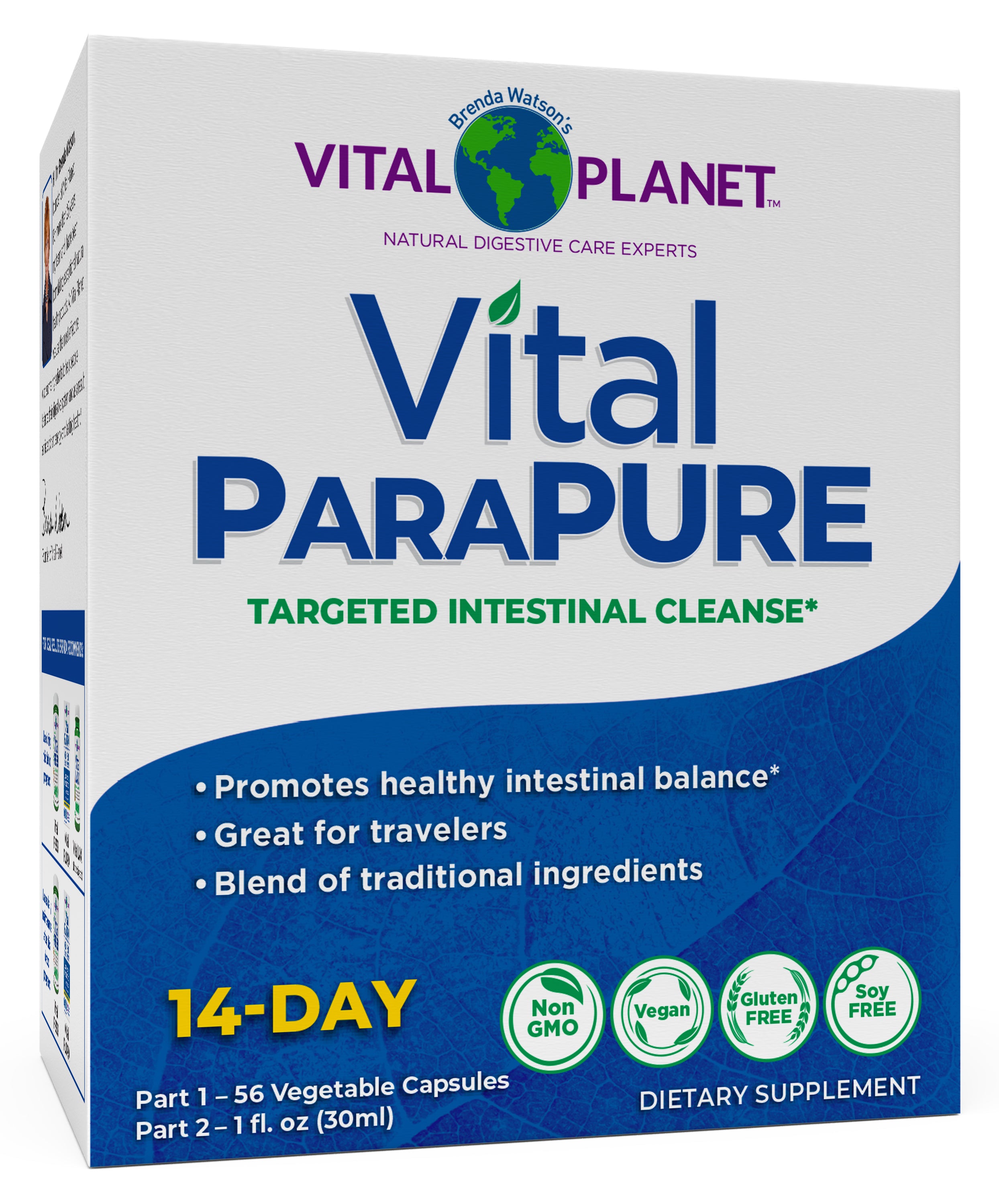
Limpieza intestinal dirigida en 2 partes con ajenjo, cáscara de nogal negro, clavo, semilla de calabaza, neem y comino negro. Apoya un ambiente intestinal saludable con hierbas tradicionales respaldadas por investigaciones publicadas.*

Fibra prebiótica de 35 fuentes. Apoya la eliminación saludable durante y después de una limpieza, y alimenta las bacterias intestinales beneficiosas.*

60 mil millones de UFC, 60 cepas diversas, 7 prebióticos orgánicos. El probiótico post-limpieza ideal para reconstruir la diversidad microbiana.*

Fórmula a base de L-Glutamina que apoya la integridad del revestimiento intestinal después de una limpieza. Disponible en polvo, sobres individuales y cápsulas.*
Basado en la investigación de este artículo. Esto es una guía educativa, no un diagnóstico médico.
Sus respuestas sugieren un enfoque integral: una limpieza herbal completa de 28 días seguida de una restauración intestinal. La combinación de sus síntomas y la falta de experiencia previa en limpieza apuntan a un protocolo completo. Use fibra durante toda la limpieza para apoyar la eliminación, luego pase a un probiótico de alta diversidad y al apoyo del revestimiento intestinal después.*
Su situación requiere una limpieza dirigida seguida de restauración microbiana. Dado que ya tiene algo de experiencia o síntomas moderados, concéntrese en completar la limpieza de 28 días con apoyo de fibra, luego reconstruya la diversidad de su microbioma con un probiótico multicepa.*
Su salud digestiva está en buen estado y usted está pensando de forma proactiva. Una limpieza herbal periódica 1-2 veces al año apoya el bienestar intestinal continuo. Dado que ya toma un probiótico, continúe tomándolo después de completar la limpieza para mantener el equilibrio que ha construido.*
Viajar es uno de los factores de riesgo más comunes de exposición a parásitos intestinales. Una limpieza completa con apoyo de fibra aborda la preocupación inmediata, y el seguimiento con un probiótico ayuda a restaurar el ecosistema intestinal que el viaje pudo haber alterado. Si los síntomas persisten después de completar el protocolo, consulte a su proveedor de atención médica para un análisis de heces.*
Preguntas frecuentes
- Amin OM. Prevalencia estacional de parásitos intestinales en los Estados Unidos durante 2000. Am J Trop Med Hyg. 2002;66(6):799-803. PubMed
- Zaiss MM, et al. Interacciones entre parásitos intestinales y el sistema inmunitario. Curr Opin Immunol. 2023;84:102361. PubMed
- Ezzat SM, et al. Actividad antihelmíntica de Artemisia absinthium contra Hymenolepis nana. J Helminthol. 2017;92(3):1-7. PubMed
- Nafees Khan H, et al. Ajenjo: Revisión farmacológica y terapéutica. Molecules. 2020;25(13):2983. PubMed
- Attia EM, et al. La juglona demuestra actividad antiesquistosomática y reduce la deposición de huevos. Parasit Vectors. 2022;15(1):458. PubMed
- Ho LD, et al. Análisis metabolómico de las nueces de Juglans nigra (nogal negro). Metabolites. 2018;8(4):58. PubMed
- Abd-Alsalam AM, et al. Eficacia del eugenol contra las larvas de Trichinella spiralis. Pathogens. 2023;12(1):96. PubMed
- Sayed AA, et al. Eugenol: Actividad esquistosomicida y antiinflamatoria. Parasit Vectors. 2019;12(1):96. PubMed
- Quave CL, et al. Actividad antihelmíntica del extracto de semilla de Cucurbita pepo. Int J Mol Sci. 2016;17(9):1421. PubMed
- Alkobati M, et al. Actividad del extracto de semilla de calabaza contra Hymenolepis nana. Acta Parasitol. 2019;64(2):276-281. PubMed
- Salem ML. Nigella sativa: Una revisión exhaustiva de las propiedades antimicrobianas. Saudi Pharm J. 2015;23(3):291-302. PubMed
- Ashraf SS, et al. Nigella sativa y timoquinona: Amplia eficacia antimicrobiana. Integr Med Res. 2019;8(3):184-193. PubMed
- Shaikh SA, et al. Actividad antihelmíntica del polvo de hoja de neem contra la estrongilosis bovina. J Parasit Dis. 2015;40(4):1234-1237. PubMed
- Travers RL, et al. Probióticos para el control de parásitos: Una visión general. Parasit Vectors. 2011;4:195. PubMed
- Mpairwe H, et al. Modulación de la microbiota intestinal para el manejo de parásitos. Trends Parasitol. 2016;33(1):33-43. PubMed
- Adak M, et al. Metabolitos secundarios de plantas como agentes antihelmínticos: Una revisión sistemática. J Tradit Chin Med. 2022;42(4):634-641. PubMed
- Mpairwe H, et al. Gusanos intestinales y el microbioma intestinal. Trends Parasitol. 2016;33(1):27-32. PubMed
Este producto no está destinado a diagnosticar, tratar, curar o prevenir ninguna enfermedad.
Consulte a su proveedor de atención médica antes de comenzar cualquier régimen de suplementos.