
 SCIENCE-BACKED INTESTINAL WELLNESS
Parasite Cleanse: A Science-Backed Guide to Intestinal Wellness
Intestinal parasites affect more people than you think. This guide cuts through the social media hype with PubMed-cited research on the herbs that actually have evidence behind them.
What Are Intestinal Parasites?
Intestinal parasites are organisms that take up residence in the digestive tract, living off the nutrients meant for their host. They fall into two main categories: protozoa (single-celled organisms like Giardia and Blastocystis) and helminths (multi-celled worms including pinworms, roundworms, and tapeworms).1
The assumption that parasitic infections only happen in tropical regions is outdated. A large-scale analysis of 5,792 fecal specimens collected across the United States found that roughly one-third tested positive for at least one intestinal parasite, with Blastocystis hominis identified in 72% of positive cases.1 Pinworms alone affect an estimated 40 million Americans at any given time, making them the most common helminth infection in the country.
Risk factors include international travel, contaminated water, undercooked meat, contact with animals, and weakened immune function. But even people with no obvious risk factors test positive, which is partly why research into intestinal parasites and the gut immune connection has accelerated in recent years.2
Signs Your Body May Be Hosting Unwanted Guests
Intestinal parasites rarely announce themselves with a single obvious symptom. Instead, they tend to produce a cluster of issues that can mimic other digestive problems. If several of the following signs sound familiar, it may be worth exploring your intestinal wellness.*

Recurring occasional gas, bloating, or irregular bowel habits that do not resolve with dietary changes alone.*

Parasites compete for nutrients, potentially contributing to low energy and difficulty recovering from everyday activities.*

Unexplained iron or B12 deficiency despite adequate dietary intake. Parasites intercept nutrients before your body can absorb them.*

The gut-skin axis means intestinal disruptions can show up as occasional rashes, hives, or itching.*

Nighttime restlessness or teeth grinding (bruxism) have been associated with intestinal parasites in some populations. The gut-sleep connection runs deep.*

Parasites can modulate the immune response, potentially making the body more susceptible to other challenges.2*
 When to See a Doctor
If you suspect a parasitic infection, a stool test from your healthcare provider is the most reliable way to confirm it. The information in this article is educational and not a substitute for medical diagnosis or treatment.
The Herbal Tradition: Wormwood, Black Walnut, and Clove
Long before modern pharmacology, traditional healers across cultures relied on specific plants to support intestinal wellness. Three herbs in particular have been used for centuries and now have a growing body of published research behind them: wormwood, black walnut hull, and clove bud.
What makes this trio notable is that each herb appears to work through a different mechanism, which is why traditional herbalists have long combined them rather than using any one alone.

The plant that gave us artemisinin, the Nobel Prize-winning compound. Research shows A. absinthium extract achieved comparable efficacy to the pharmaceutical praziquantel in reducing tapeworm egg counts and worm burden in controlled studies.3 Its polyphenols and flavonoids have documented activity recognized since ancient Egypt.4*

Contains juglone, a naphthoquinone compound with published research. One study found juglone reduced parasite burden by 63% in male organisms and 52% in female organisms, with a 66% reduction in egg load in liver tissue.5 The hull also contains tannins and iodine compounds that support intestinal wellness.*

Rich in eugenol, its primary active compound. Published research demonstrates eugenol achieved 100% efficacy against T. spiralis larvae at tested concentrations, with activity observed within 24 hours.7 Traditional herbalists specifically pair clove with wormwood and black walnut for this reason.*
These three herbs form the backbone of most traditional parasite cleanse formulas. But published research extends well beyond this trio.
The Research: Herbs Studied for Intestinal Wellness
The table below compiles published findings on the key herbs found in traditional intestinal cleanse formulas. Each entry links to its PubMed source.
| Herb | Active Compound | Key Research Finding | In ParaPure |
|---|---|---|---|
| Artemisia absinthium (Wormwood) | Absinthin, polyphenols | Comparable efficacy to praziquantel for tapeworm egg reduction3 | Part 1 + 2 |
| Juglans nigra (Black Walnut Hull) | Juglone | 63% reduction in parasite burden; 66% egg load reduction5 | Part 1 + 2 |
| Syzygium aromaticum (Clove Bud) | Eugenol | 100% efficacy against T. spiralis larvae within 24 hours7 | Part 2 |
| Cucurbita pepo (Pumpkin Seed) | Cucurbitin | Significant reduction in egg counts and adult worm burden9 | Part 1 |
| Nigella sativa (Black Cumin) | Thymoquinone | Broad antimicrobial spectrum including parasites; bactericidal activity11 | Part 1 |
| Azadirachta indica (Neem) | Azadirachtin | Significant EPG reduction by day 7 in controlled studies13 | Part 1 |
| Uncaria tomentosa (Cat's Claw) | Oxindole alkaloids | Immune-modulating properties that support the body's natural defenses* | Part 1 |
| Thymus vulgaris (Thyme) | Thymol | Part of the broader terpenoid class with documented intestinal activity16 | Part 2 |
| Cinnamomum (Cinnamon Bark) | Cinnamaldehyde | Terpenoid with documented antimicrobial properties16 | Part 2 |
A 2022 systematic review examining 68+ plant species confirmed that secondary metabolites including terpenes, glycosides, saponins, flavonoids, tannins, and alkaloids demonstrate broad activity in supporting intestinal wellness.16
How a Parasite Cleanse Works
A well-designed herbal intestinal cleanse is not a single-day event. It follows a structured timeline, and understanding what to expect at each phase helps you get the most from the process.
The Two-Part Approach
Many traditional formulas use a two-part system for a reason: different delivery formats allow different herbs to work at different points in the digestive tract. Capsules release in the stomach and upper intestine; liquid extracts begin absorbing earlier and reach areas capsules may not.
1,200 mg blend: Black Walnut Hull, Pumpkin Seed, Wormwood, Quassia Bark, Pomegranate, Neem, Black Cumin, Cat's Claw, Long Pepper
1,000 mg blend: Black Walnut Hull, Thyme Leaf, Cinnamon Bark, Clove Bud, Wormwood Aerial Parts
What to Expect: The Cleanse Timeline
Your body begins responding to the herbal compounds. Some people notice increased bowel activity as the digestive system adjusts. Stay hydrated and eat clean, whole foods.
The herbal compounds are working in the intestinal environment. Some people experience temporary die-off symptoms (sometimes called Herxheimer reactions) such as occasional fatigue, mild headache, or digestive changes. This is considered a normal part of the cleansing process.*
Most die-off symptoms have subsided. Energy levels may begin improving. Continue the full course to address all lifecycle stages of intestinal organisms.
Complete the full program. This is when post-cleanse gut restoration becomes important: replenishing beneficial bacteria with probiotics and prebiotics, supporting the gut lining, and adding fiber to support healthy elimination.*
Why Fiber Matters During a Cleanse
One of the most commonly overlooked aspects of a cleanse is elimination support. As the herbal compounds do their work, the body needs an efficient way to move waste through the intestinal tract. Prebiotic fiber serves this function by supporting healthy, regular bowel movements and acting as a natural binder to help carry material out of the body.*
This is why "binder" has become one of the fastest-rising search terms related to parasite cleansing. The concept is simple: give your body the fiber it needs to eliminate effectively so the cleansing process does not create a bottleneck.*
Supporting Your Gut After a Cleanse
The cleanse itself is only half the equation. What you do afterward determines whether you build lasting intestinal wellness or simply return to baseline.
Research shows that intestinal parasites can disrupt the composition of the gut microbiome, altering the balance of beneficial bacteria and affecting immune function.2 Probiotics have been studied for their ability to support the gut environment after parasitic disruption, with strain-specific effects including nutrient competition and barrier enhancement.14
A complete post-cleanse restoration protocol typically includes three components:

Restore microbial diversity with a multi-strain probiotic. Research supports Lactobacillus species for intestinal barrier support and Bifidobacterium for digestive comfort after disruption.14 A formula with high strain diversity helps rebuild the ecosystem.*

Parasites can stress the intestinal lining. L-Glutamine and gut-supportive compounds help maintain the integrity of the intestinal barrier, which is critical for long-term digestive health.*

Feed the beneficial bacteria you just replenished. Prebiotic fiber supports both the new probiotic colonies and ongoing healthy elimination, creating the conditions for a balanced intestinal environment.*
Products That Support This Protocol
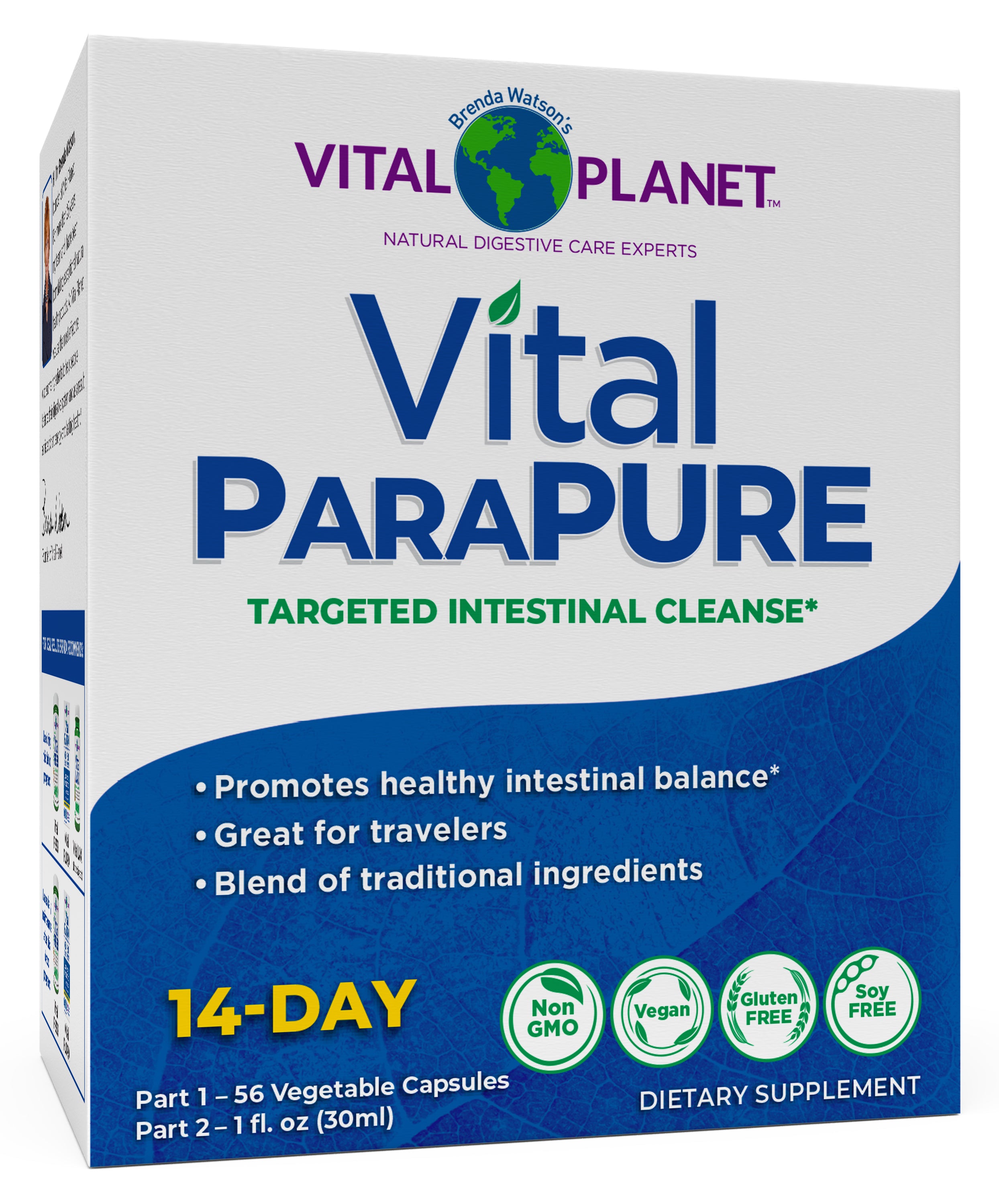
2-part targeted intestinal cleanse with wormwood, black walnut hull, clove bud, pumpkin seed, neem, and black cumin. Supports a healthy intestinal environment with traditional herbs backed by published research.*

Prebiotic fiber from 35 sources. Supports healthy elimination during and after a cleanse, and feeds beneficial gut bacteria.*

60 billion CFU, 60 diverse strains, 7 organic prebiotics. The ideal post-cleanse probiotic to rebuild microbial diversity.*

L-Glutamine-based formula that supports intestinal lining integrity after a cleanse. Available in powder, stick packs, and capsules.*
Based on the research in this article. This is educational guidance, not a medical diagnosis.
Your answers suggest a comprehensive approach: a full 28-day herbal cleanse followed by gut restoration. The combination of your symptoms and lack of prior cleansing experience points to a complete protocol. Use fiber throughout the cleanse for elimination support, then transition to a high-diversity probiotic and gut lining support afterward.*
Your situation calls for a targeted cleanse followed by microbial restoration. Since you already have some experience or moderate symptoms, focus on completing the full 28-day cleanse with fiber support, then rebuild your microbiome diversity with a multi-strain probiotic.*
Your digestive health is in a good place and you are thinking proactively. A periodic herbal cleanse 1-2 times per year supports ongoing intestinal wellness. Since you already take a probiotic, continue it after completing the cleanse to maintain the balance you have built.*
Travel is one of the most common risk factors for intestinal parasite exposure. A complete cleanse with fiber support addresses the immediate concern, and following up with a probiotic helps restore the gut ecosystem that travel may have disrupted. If symptoms persist after completing the protocol, consult your healthcare provider for a stool test.*
Frequently Asked Questions
- Amin OM. Seasonal prevalence of intestinal parasites in the United States during 2000. Am J Trop Med Hyg. 2002;66(6):799-803. PubMed
- Zaiss MM, et al. Interactions between intestinal parasites and the immune system. Curr Opin Immunol. 2023;84:102361. PubMed
- Ezzat SM, et al. Anthelmintic activity of Artemisia absinthium against Hymenolepis nana. J Helminthol. 2017;92(3):1-7. PubMed
- Nafees Khan H, et al. Wormwood: Pharmacological and therapeutic review. Molecules. 2020;25(13):2983. PubMed
- Attia EM, et al. Juglone demonstrates antischistosomal activity and reduces egg deposition. Parasit Vectors. 2022;15(1):458. PubMed
- Ho LD, et al. Metabolomic analysis of Juglans nigra (black walnut) kernels. Metabolites. 2018;8(4):58. PubMed
- Abd-Alsalam AM, et al. Eugenol efficacy against Trichinella spiralis larvae. Pathogens. 2023;12(1):96. PubMed
- Sayed AA, et al. Eugenol: Schistosomicidal and anti-inflammatory activity. Parasit Vectors. 2019;12(1):96. PubMed
- Quave CL, et al. Anthelmintic activity of Cucurbita pepo seed extract. Int J Mol Sci. 2016;17(9):1421. PubMed
- Alkobati M, et al. Pumpkin seed extract activity against Hymenolepis nana. Acta Parasitol. 2019;64(2):276-281. PubMed
- Salem ML. Nigella sativa: A comprehensive review of antimicrobial properties. Saudi Pharm J. 2015;23(3):291-302. PubMed
- Ashraf SS, et al. Nigella sativa and thymoquinone: Broad antimicrobial efficacy. Integr Med Res. 2019;8(3):184-193. PubMed
- Shaikh SA, et al. Neem leaf powder anthelmintic activity against bovine strongylosis. J Parasit Dis. 2015;40(4):1234-1237. PubMed
- Travers RL, et al. Probiotics for the control of parasites: An overview. Parasit Vectors. 2011;4:195. PubMed
- Mpairwe H, et al. Modulating gut microbiota for parasite management. Trends Parasitol. 2016;33(1):33-43. PubMed
- Adak M, et al. Plant secondary metabolites as anthelmintic agents: A systematic review. J Tradit Chin Med. 2022;42(4):634-641. PubMed
- Mpairwe H, et al. Intestinal worms and the gut microbiome. Trends Parasitol. 2016;33(1):27-32. PubMed
This product is not intended to diagnose, treat, cure, or prevent any disease.
Consult your healthcare provider before starting any supplement regimen.